


The Benefits of Niacinamide for Skin
Niacinamide · Hydration · Everyday balance
One ingredient.
A little more balance.
From moisture support to a more even-looking complexion, niacinamide earns its place through the everyday details. Here’s how to find its place in your ritual.

Niacinamide is a form of vitamin B3 used in skincare to support the moisture barrier and improve the appearance of uneven tone, texture and fine lines. Some formulas may also help reduce surface oil and the look of visible pores.
It is an ingredient worth knowing if your skin feels dry in some places, shiny in others, or simply less even than you would like. And it may already be in the moisturizer you reach for each morning.
You can start there. Before adding another serum, take a look at your current routine and the one thing you would most like it to help with.
01 / Get to know vitamin B3
What does niacinamide do for skin?
Also called nicotinamide, niacinamide is a water-soluble form of vitamin B3. In this guide, we are talking about topical skincare: the ingredient in your serum, cream or sunscreen.
Supports moisture retention
The outer skin barrier helps limit water loss. Research found that topical niacinamide increased certain barrier lipids and reduced water loss in dry skin. It can be a useful part of a moisturizing formula when comfort is your priority. Read the barrier research.
Helps uneven-looking tone
Niacinamide has been studied for visible pigmentation and blotchiness. A 12-week trial in 50 women found improvements in pigmentation, texture and fine lines with a 5% niacinamide moisturizer compared with the same base without it. Read the clinical study.
May help with surface oil
Trials of a 2% niacinamide moisturizer found reductions in some measures of facial oil, with results differing between study groups. That makes it an ingredient to consider for shine, rather than a guarantee of oil-free skin. Read the sebum study.
Refines the look of texture
A smaller study of a 4% niacinamide formula reported improvements in measures of visible pores and unevenness at eight weeks, and wrinkles at twelve weeks. These are changes in appearance; pores remain a normal part of skin. Read the texture study.
These studies tested specific formulas and groups of participants. They help explain the interest in niacinamide, but do not promise identical results from every product containing it.
02 / Find your fit
Choose the whole formula.
The percentage is only part of the story.
The studies above used concentrations between 2% and 5%. They do not establish that a 10% or 20% product is a better starting point. Texture, supporting ingredients and your skin’s tolerance matter too.
For dry skin, consider a cream that leaves your skin comfortable. For combination skin, a lighter lotion or gel-cream may be easier to wear. For sensitive skin, pay particular attention to fragrance, essential oils and ingredients that have bothered you before.
If your moisturizer already contains niacinamide and suits you, there may be little reason to add a separate niacinamide serum. A useful routine can be quite small.
03 / Make it an everyday step
How to use niacinamide in your routine.
Begin with one new product and follow its directions. Test it on a small area before wider use; the American Academy of Dermatology recommends seven to ten days of product testing. Stop if it causes irritation.
In the morning
Cleanse as needed, apply a niacinamide serum if you use one, then moisturize. Finish with broad-spectrum SPF 30 or higher. If your moisturizer contains niacinamide, that can be your niacinamide step.
In the evening
Cleanse, apply your serum according to its label, and follow with moisturizer. A niacinamide cream can sit at the moisturizing stage without a separate serum underneath.
There is no need to mix products together in your hand. Apply them separately as directed, especially sunscreen, which should not be diluted with serum or moisturizer. Our skincare layering guide can help you arrange the steps.
While introducing something new, keep the rest of your routine familiar. If skin becomes persistently itchy, red or uncomfortable, pause the product and seek advice if symptoms do not settle.
A little perspective
Consistency needs comfort.
Some days, the most useful thing your routine can do is leave your skin feeling soft and settled. Choose a texture you enjoy, give it time, and resist adding several new treatments before you know how the first one feels.
04 / The Éminence edit
Two ways to bring niacinamide into your ritual.
At the moisturizing step
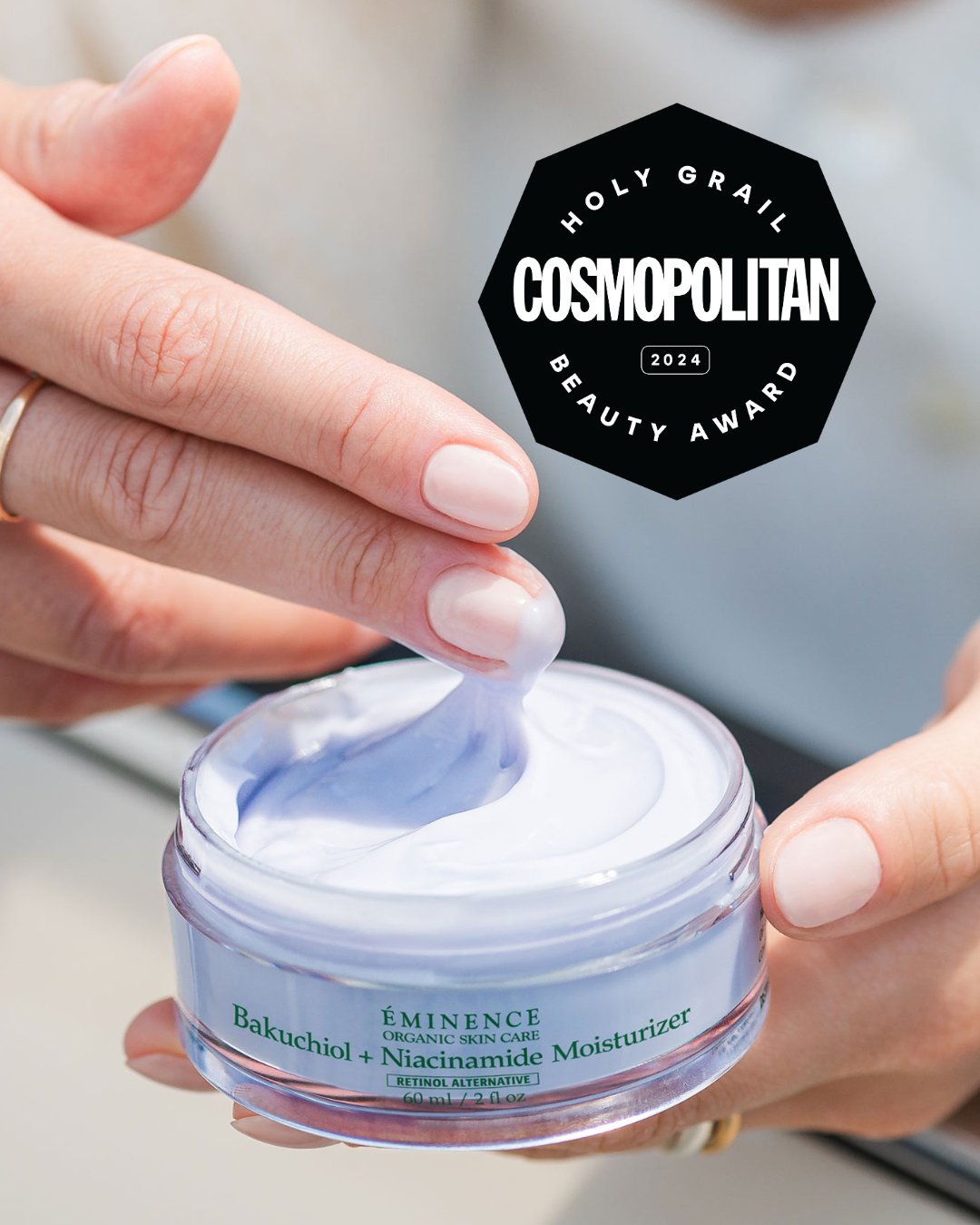
Éminence Bakuchiol + Niacinamide Moisturizer combines niacinamide, bakuchiol and provitamin B5 in a lightweight gel-cream. It is worth exploring if you prefer your targeted ingredients within your moisturizer.
The formula contains fragrance, limonene and linalool. If scented skincare is a known trigger, check the full ingredient list before choosing it. For more on its companion ingredient, read our guide to bakuchiol for sensitive skin.
At the sun-protection step
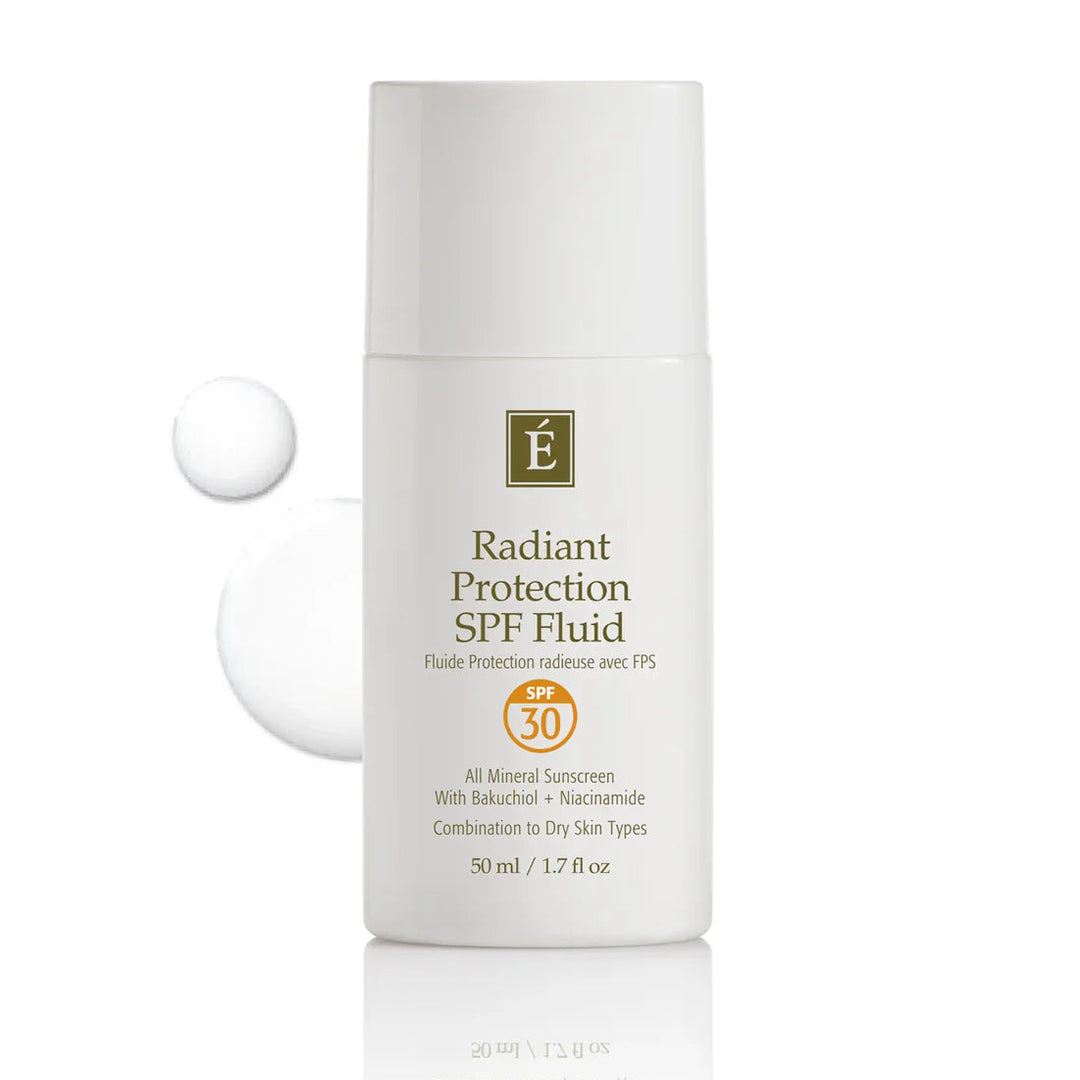
Éminence Radiant Protection SPF Fluid contains niacinamide and bakuchiol, with zinc oxide providing broad-spectrum SPF 30 protection. Its nourishing feel and dewy finish are intended for combination to dry skin.
Shake well and apply liberally and evenly, following the label. Reapply at least every two hours, and use a water-resistant sunscreen for swimming or sweating. Niacinamide itself is not a sunscreen.
Check the product page for current availability. Choose your SPF around the protection, finish and application you will keep up with.
05 / Set a realistic rhythm
How long does niacinamide take to work?
A moisturizing formula may make skin feel softer sooner than you see a change in uneven tone or fine lines. Several studies above assessed visible changes over eight to twelve weeks, so give a comfortable routine time before judging it.
More product or a higher percentage does not guarantee faster progress. Look for gradual changes in the concern you started with, and keep sun protection part of the routine.
Before you explore
A few things you might be wondering.
Is niacinamide good for sensitive skin?
It can suit some sensitive complexions, but the finished formula matters. Choose around your known triggers, test first and introduce one product at a time. A product containing niacinamide can still cause irritation.
Does niacinamide shrink pores?
It may help improve their appearance in some formulas. Think smoother-looking texture rather than pores disappearing. A little visible texture is normal.
Can I use niacinamide every day?
Many niacinamide moisturizers are designed for daily use. Follow your product’s label and introduce it gradually if your skin is reactive. You do not need several niacinamide products at once.
Is niacinamide the same as bakuchiol?
No. Niacinamide is a form of vitamin B3; bakuchiol is a different ingredient used in products aimed at visible signs of skin ageing. Some formulas combine both.
Do I need a serum if my moisturizer has niacinamide?
Not necessarily. Start with the product that already fits your routine. A separate serum is an option, rather than an essential step.
Find your ritual
A routine that makes sense for you.
Tell us what your skin feels like, what you already use and the one concern you would like to address. We can help you compare textures and find a place to begin.
Explore Éminence online or visit Oak + Tonic in Calgary for help finding your next everyday favourite.
Explore Éminence Organic Skin Care →


Leave a comment